


When buying a home today, it is no longer just about aesthetics, location, or immediate affordability. Amidst shifting climate patterns and rising living costs, “Sustainable Living” has become a core consideration for modern homebuyers.
A sustainable home is not merely an eco-friendly trend; it is a long-term investment that drifts down utility bills, minimizes environmental impact, and enhances the overall well-being of its residents. This guide provides an in-depth analysis and framework to help you choose a home built for the future.
1. Analyzing Location Through a Sustainability Lens (Sustainable Location)
An ideal location from a sustainability perspective goes beyond proximity to shopping malls or transit lines. It requires an analysis of the surrounding “Eco-ecosystem”:
-
Low-Carbon Mobility: Prioritize neighborhoods that offer diverse transportation options, accessibility to public transit, or are within walking and cycling distance to local amenities to reduce reliance on personal vehicles.
-
Climate Change Resilience: Evaluate the history of natural disasters in the area, such as flooding risks or landslides. A truly sustainable home must be located in a zone safe from long-term climate vulnerabilities.
-
Community Green Spaces: The presence of mature trees and public parks helps mitigate the Urban Heat Island effect, cooling the neighborhood and ensuring cleaner air quality.
2. Sun and Wind Orientation: The Science of Passive Design
Utilizing natural elements to regulate indoor climate—known as Passive Design—is the cornerstone of energy efficiency. When inspecting a property, look for these architectural features:
| Design Factors | Ideal Implementation for Sustainable Homes |
| Building Orientation | The longest sides of the house should ideally face North or South to avoid the intense afternoon sun from the West. |
| Window Placement | Openings should be strategically positioned to facilitate Cross Ventilation, allowing wind to flow through naturally and reducing reliance on air conditioning. |
| Eaves and Awnings | Well-designed overhangs should shade glass surfaces from direct sunlight while still allowing ample natural daylight to illuminate the interior. |
3. Eco-Friendly and Resilient Construction Materials
During a site visit or home inspection, it is essential to inquire about the sustainability profile of the building materials:
-
Thermal Insulation: Walls should utilize autoclaved lightweight concrete (ALC) or advanced precast systems with high thermal resistance. Roofs must feature radiant barriers and fiberglass insulation (ideally at least 6 inches thick).
-
Low-E Glass Windows: Low-Emissivity glass is crucial for reflecting infrared heat away from the house while allowing visible light to pass through.
-
Non-Toxic Materials: Interior paints and finishes should be certified as Low VOCs (Volatile Organic Compounds) to prevent the off-gassing of harmful chemicals, protecting your respiratory health over time. Additionally, look for responsibly sourced timber or recycled materials.
4. Active Technology for Advanced Energy & Resource Efficiency
Modern sustainable homes integrate smart systems to actively optimize utility consumption:
-
Solar Rooftop Integration: Look for properties that are “Solar Ready” (pre-wired for solar installation) or come equipped with a solar photovoltaic system to dramatically offset daytime electricity costs.
-
Smart Water Management: Advanced setups include rainwater harvesting systems or graywater recycling (reusing water from sinks and laundry for landscape irrigation), paired with certified low-flow plumbing fixtures.
-
Smart Home Systems: Integrated automated sensors, smart thermostats, and 100% LED lighting configurations ensure energy is never wasted in unoccupied rooms.
5. Long-Term Financial Analysis: Life Cycle Cost
Many buyers fall into the trap of looking only at the “Initial Purchase Price.” Evaluating a sustainable home requires calculating its Life Cycle Cost (total cost of ownership).
The ROI Framework:
While a sustainable home may carry a 5% to 10% price premium due to advanced materials and green technologies, the reduction in electricity, water, and ongoing maintenance costs typically allows the property to “pay back” its premium within 5 to 10 years. Over the lifespan of the home, it yields significantly higher net savings.
Conclusion: The Sustainable Home Buyer’s Checklist
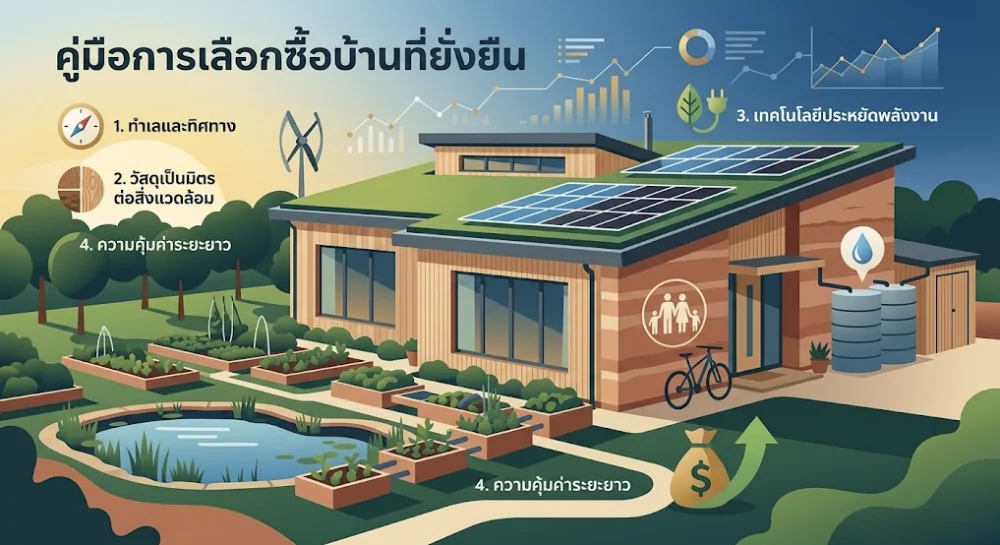
Before signing your property contract, cross-reference these 4 essential criteria:
-
Location: Is it resilient to climate risks, highly accessible, and rich in green spaces?
-
Design: Does it utilize passive cooling, optimal sun orientation, and natural daylight?
-
Materials: Are the components durable, heavily insulated, and non-toxic?
-
Systems: Is it equipped for solar energy, smart power management, and water conservation?
Investing in a sustainable home is more than just buying a piece of real estate—it is a commitment to your long-term health, financial security, and the future of our planet.