

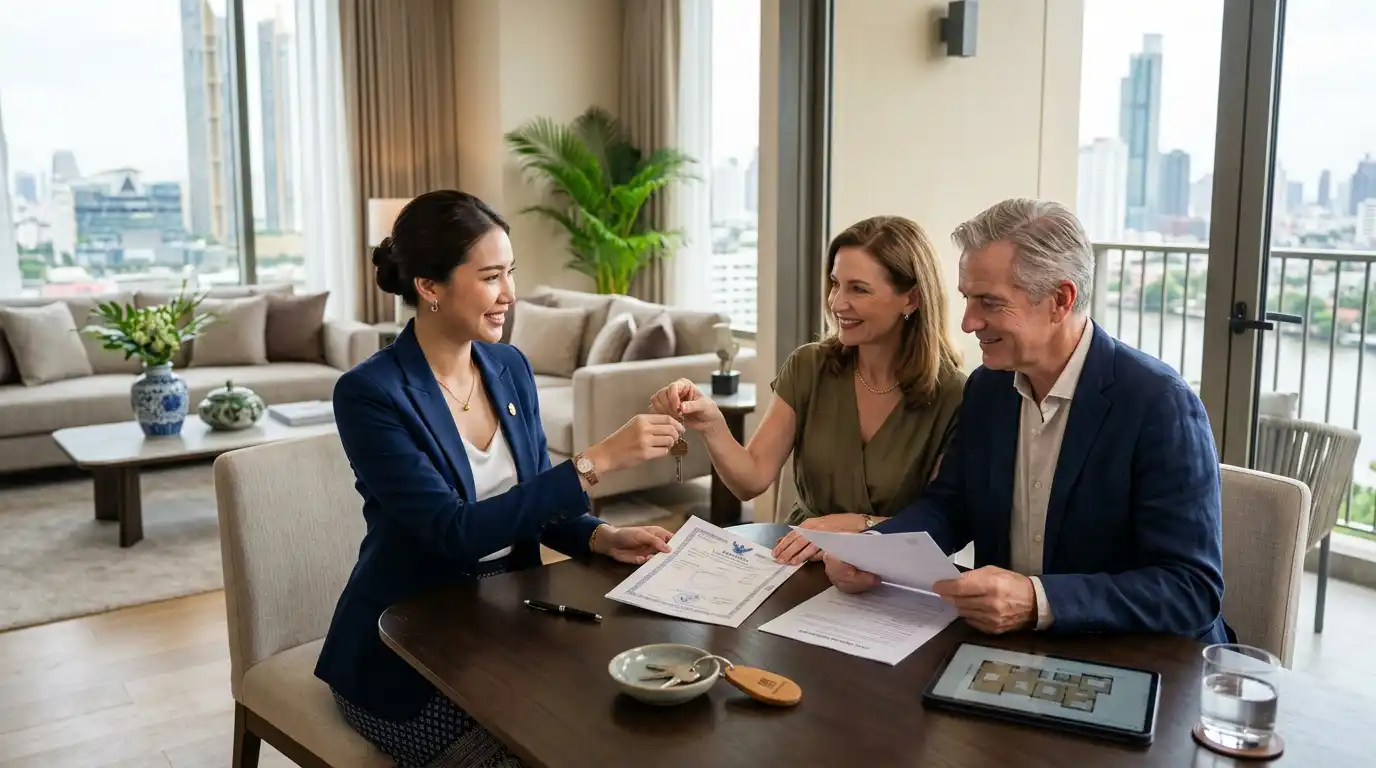
Foreign Ownership LandscapeDirect land ownership (freehold) for foreigners is restricted in Thailand. Several alternative methods exist for foreigners to own or operate property legally.
Methods include:
- Leasehold
- Company Ownership
- Condominium Ownership
- Thai Partner Individual)
Understanding each method’s legal and financial implications is crucial.
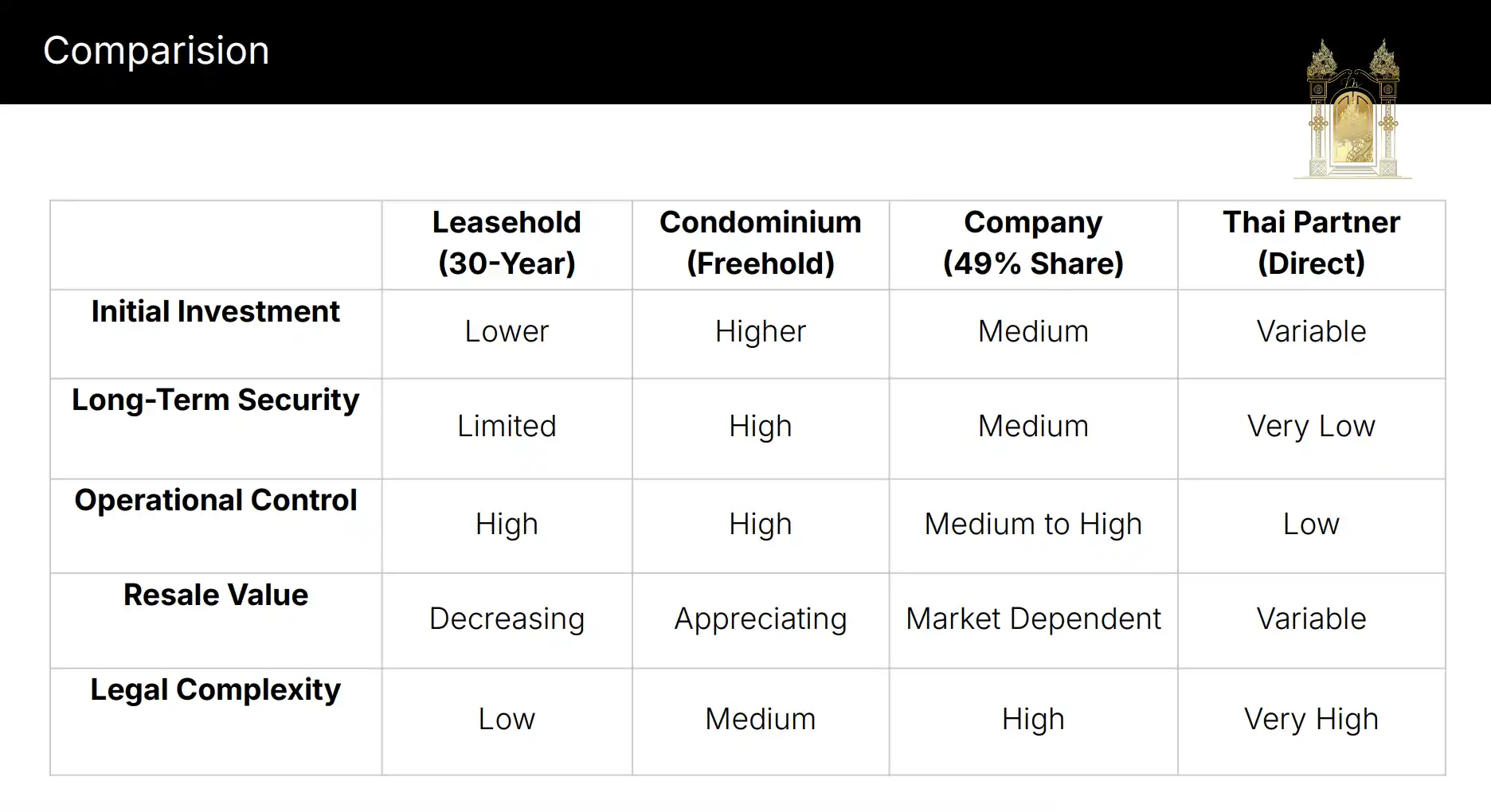
Leasehold 30Year Lease
Right to use property for up to 30 years.
Operation: Leaseholder controls property operations (renting, residence).
Renewal: Potentially renewable (up to 90 years total, but initial 30-year is guaranteed).
Renewal terms are not guaranteed.
Financial:
- Lower initial investment.
- Responsible for property taxes & maintenance.
- Decreasing resale value as lease nears expiry.
Legal: - Leases > 3 years must be registered at Land Department.
- Lease agreement outlines terms and renewal options.
Indirect land ownership via a Thai company.
Company structure:
- Majority Thai Shareholders 51%,
- Minority Foreign Shareholders (up to 49%.
- Foreigners can have operational control as directors.
Operation: Company (legal landowner) operates the property.Financial: - Medium initial investment.
- Company formation and operational costs.
- Resale value is market dependent.Legal:
- Governed by Land Code Act & Foreign Business Act.
- Company structure scrutinized for nominee arrangements (illegal).
- Company must have a legitimate business purpose.
Company 49% Share Ownership and operation by previous owner
Company ownership model where a foreigner holds 49% shares in a Thai company
that owns the property. Asking the previous owner to operate it is a business
arrangement, not a legal requirement of this ownership structure.
- Operation: In this model, the company owns the property, and the company can
contract with the previous owner (or any third party) to manage and operate the
property for rental or other purposes. This is a commercial agreement separate
from the ownership structure. - Financial Implications: The financial arrangements for operation would be defined
by the management contract with the previous owner, including fees, revenue
sharing, and operational responsibilities.
Outright ownership of a condominium unit.
Operation: Full ownership rights (reside, rent, sell).
Foreign Ownership Limit: Limited to 49% of total condo building space.
Financial:
- Higher initial investment.
- Long-term security as a permanent asset.
- Appreciating resale value potential.
Legal: - Foreigner registered as sole owner on title deed Chanote).
- Purchase with foreign funds (proof of remittance required).
Thai Individual as a partner for ownership
- Necessity for Direct Land Ownership: If a foreigner wants to directly own land
(freehold) in Thailand, it is generally only possible by partnering with a Thai
national. Typically, the land would be registered in the Thai partner’s name. - Risks: This approach carries significant risks for the foreign partner, as legal
ownership rests solely with the Thai national.
a. Agreements to protect the foreign partner’s investment might be difficult to enforce fully
under Thai law.
b. This method is generally discouraged due to the potential for disputes and loss of
investment.